Fulfillment
What Is a SKU (Stock Keeping Unit)? A Practical Guide
A SKU (stock keeping unit) is an internal code that identifies each product variant. How it differs from a barcode, why it matters, and how to design one.

A SKU, or stock keeping unit, is an internal code a seller assigns to each distinct product variant so it can be tracked, counted, and picked accurately. A black hoodie in size medium gets one SKU, and the same hoodie in white gets a different one, because they are counted and shipped separately. The SKU is the name your inventory system uses to tell your products apart, and it is different from a barcode, which is a standardized number a scanner reads at checkout. Get your SKUs right and every count, order, and shipment lines up. Get them wrong and you oversell stock you do not have and ship the wrong size to the wrong customer. In this guide we define the SKU, separate it from the barcode, explain why it matters for inventory and fulfillment, show a simple naming structure, and list the mistakes that quietly break a catalog.
What a SKU actually is
A SKU is a short code you create to identify one specific version of a product, down to the last attribute that changes how it is stored or sold. The key idea is the variant. One t-shirt design in three colors and four sizes is not one product to your warehouse, it is twelve separate things to count, shelve, and pick. Each of those twelve gets its own SKU. The code is internal, which means you design it, you own it, and it only has to make sense inside your own operation. It is the anchor that ties together your stock count, your product listing, your order, and the picking slip in the warehouse. Without it, those systems have no reliable way to agree on what a customer actually bought.
SKU vs barcode and UPC
People mix these up because both are codes on a product, but they do different jobs. A SKU is internal and meaningful. A barcode or UPC is external and standardized.
| Feature | SKU | Barcode / UPC |
|---|---|---|
| Who creates it | You, the seller | A global body (GS1) or the manufacturer |
| Purpose | Internal tracking and picking | Machine scanning at checkout |
| Format | Letters and numbers you design | Fixed numeric standard |
| Readable by humans | Yes, by design | No, just digits |
| Unique to | Your business | The product worldwide |
A UPC is the twelve-digit number under the striped barcode, and it identifies the same product across every store on earth. A SKU is yours alone. The same jar of coffee has one UPC everywhere, but a different SKU in every shop that sells it. One physical item usually carries both: the barcode for the scanner, the SKU for your books.
Why SKUs matter for inventory and fulfillment
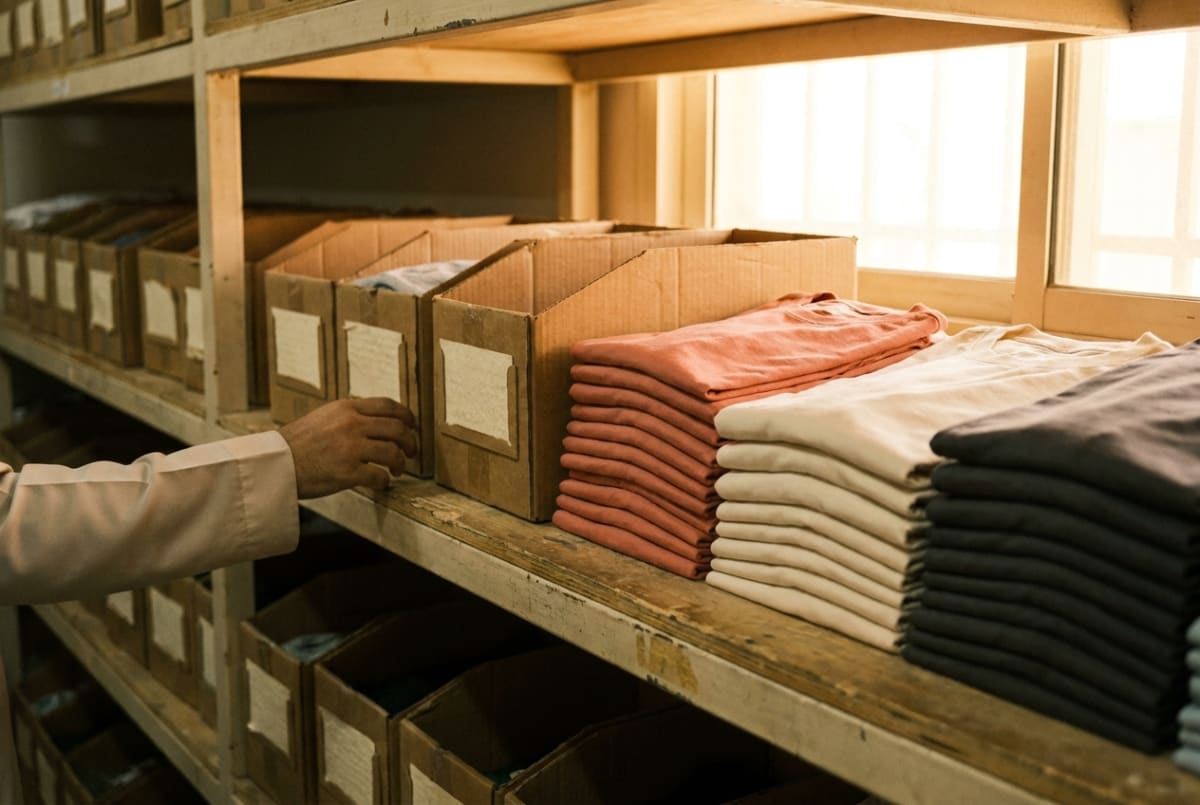
SKUs are the backbone of an accurate operation. On the inventory side, they let you count stock per variant, so you know you have four mediums left and zero larges, not just "some hoodies." That precision is what stops you from selling a size you cannot ship. On the fulfillment side, the SKU is what the picker reads to pull the exact item from the exact shelf, which cuts wrong-item shipments and the returns they cause. SKUs also let you see which variants actually sell, so you reorder the winners and stop tying up cash in dead sizes. When your storage and shipping partner receives your stock, the SKU is the shared language that keeps their count and yours in sync.
How to design a good SKU naming system
A good SKU is short, consistent, and readable at a glance. Build it from stable attributes, ordered from general to specific. A simple structure that works for apparel:
[Category]-[Product]-[Color]-[Size]
So a black classic hoodie in medium becomes:
HOD-CLASSIC-BLK-M
And the same hoodie in white, large:
HOD-CLASSIC-WHT-L
Read left to right, anyone on your team knows the category, the product, the color, and the size without opening a system. Follow a few rules to keep it clean:
- Start general, end specific. Category first, then the smallest detail like size last.
- Fix the length. Use the same segment widths everywhere so codes line up and sort cleanly.
- Use letters and numbers only. No spaces, slashes, or symbols that break spreadsheets and scanners.
- Keep it human-readable. A person should decode it at a glance, so avoid random strings.
- Never reuse a retired code. Once a SKU is gone, leave it gone, or old data will point at the wrong item.
Design the structure once, before you have a hundred products, and write it down as a one-page rule. Retrofitting a naming system onto a live catalog means relabeling stock, reprinting slips, and reconciling counts. It is far cheaper to decide the pattern on day one.
Common SKU mistakes
The same errors break catalogs again and again. The biggest is encoding price or cost into the SKU, because prices change and the code becomes a lie the day you run a sale. Second is starting a SKU with a leading zero, which spreadsheets silently strip, turning 0450 into 450 and breaking your matches. Third is inconsistent length and format, so HODBLKM and HOD-BLK-MED describe the same thing and no system can tell. Fourth is reusing an old code for a new product, which corrupts your history. Fifth is making SKUs too long or too cryptic to read. Keep them short, stable, consistent, and free of anything that changes, and most of these problems never appear. If you are still deciding how much to stock per SKU, our guide on minimum order quantity helps.
The bottom line
A SKU, the stock keeping unit, is the internal code you assign to each product variant so your counts, orders, and shipments all agree. It is not a barcode: the barcode is a standardized number a scanner reads, while the SKU is yours to design and full of meaning. Good SKUs are short, consistent, human-readable, and built from stable attributes like category, color, and size, never from price. Get the naming system right early and your inventory and fulfillment stay accurate as you grow. Whether you print on demand or hold stock, the SKU is the small detail that keeps the whole operation honest.
Frequently asked questions
- What does SKU stand for?
- SKU stands for stock keeping unit. It is an internal code a seller assigns to each distinct product variant, such as a black hoodie in size medium, so it can be tracked, counted, and picked accurately.
- What is the difference between a SKU and a barcode?
- A SKU is an internal code you design for yourself, and it can carry meaning like category, color, and size. A barcode or UPC is a standardized number, often assigned by a global body, that scanners read at checkout. One product can have both.
- Does every product need a SKU?
- Every variant you want to track separately needs its own SKU. A t-shirt in three colors and four sizes is not one SKU, it is twelve, because each color and size combination is counted and shipped on its own.
- What makes a good SKU naming system?
- A good system is short, consistent, human-readable, and built from stable attributes like category, color, and size. It avoids spaces and special characters, never reuses a retired code, and stays the same length across the catalog.
- Should a SKU include the price?
- No. Never build price, cost, or supplier discounts into a SKU. Prices change often, and a code that encodes price becomes wrong the moment you run a sale, forcing you to relabel stock you already own.