Print on demand
DTG vs DTF: Which Print Method Is Right for Your Products?
A practical comparison of DTG vs DTF printing across fabric compatibility, feel, color, durability, and cost per unit, so you pick the right method for your store.

Direct-to-garment (DTG) and direct-to-film (DTF) are two modern ways to print your design on clothing with no minimum quantity, and the choice comes down to two things: the fabric you print on, and the feel and look you want. In short: choose DTG when you print on cotton and want a soft, barely-there feel with fine photo detail, because the ink goes into the fabric itself. Choose DTF when you print on many fabric types like polyester, blends, and dark colors, and you want bold, vivid results, because the design is printed on a film and then heat-transferred on top of the fabric. This guide compares DTG vs DTF on fabric compatibility, feel, color, durability, and cost, then explains which suits a Saudi print-on-demand seller.
The core difference in one line
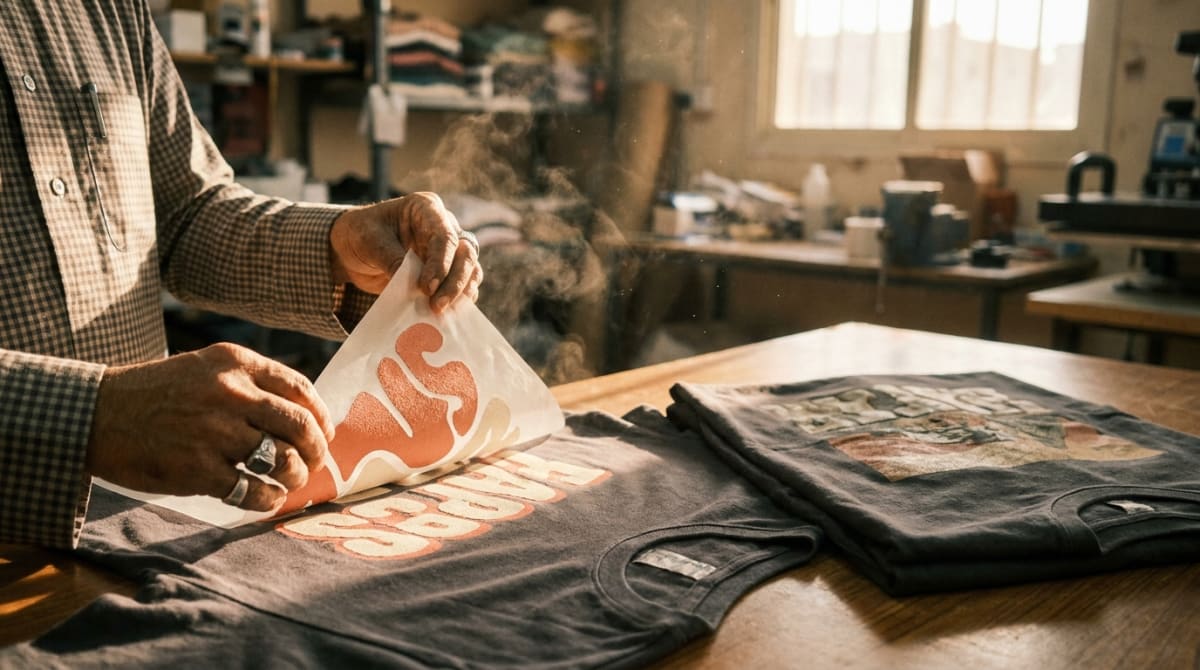
DTG is a printer that sprays ink directly into the fabric fibers, so the print becomes part of the garment. DTF prints the design onto a clear film first, dusts it with an adhesive powder, then heat-transfers it to sit on top of the fabric. From that one distinction, ink inside the fabric versus a layer transferred on top, every other difference in fabric, feel, and color follows.
A direct comparison
| Criterion | DTG (direct-to-garment) | DTF (direct-to-film) |
|---|---|---|
| How it prints | Sprays ink into the fabric fibers | Prints on film, then heat-transfers it |
| Fabric compatibility | Best on cotton and high-cotton | Wide: cotton, polyester, blends, darks |
| Feel (hand) | Soft, barely noticeable | A layer you can feel, but flexible |
| Color vibrancy | Natural and accurate, great in photos | Bold and vivid, especially on dark |
| Detail and gradients | Excellent for photos and soft gradients | Good, with clean, defined edges |
| Durability and wash-fastness | Good on treated cotton | Good, a flexible layer resists cracking |
| Pretreatment | Needed, especially for dark colors | No complex pretreatment needed |
| Minimum quantity | One piece | One piece |
| Best use case | Cotton tees and fine photo detail | Varied fabrics and products, vivid color |
When to choose DTG
Choose it when most of your products are cotton and you want a print that is barely noticeable to the touch, as if it were part of the fabric. DTG excels at photographs, soft gradients, and fine detail, so it gives a premium result on light cotton tees in particular. It needs pretreatment before printing, especially on dark colors, but the soft hand remains its biggest advantage.
When to choose DTF
Choose it when you print on different fabric types beyond cotton, such as polyester, blends, athletic wear, and bags, or when you want bold, vivid colors that show strongly even on dark pieces. DTF needs no complex pretreatment, and its flexible layer bonds on top of many fabrics, giving you wider freedom to diversify your product range.
Which suits a print-on-demand seller
Both methods serve print on demand well, because each prints a single piece with no minimum and no upfront inventory. The difference is the direction of your store. If your focus is soft-feel cotton tees with fine photo detail, DTG is your natural choice. If you are widening your catalog to include varied fabrics and products with bold, vivid colors, DTF gives you more flexibility. Many stores benefit from both together, each in its place.
If you are starting with cotton tees, start with DTG for its soft hand. As you expand into other fabrics and bolder colors, add DTF instead of switching your whole approach.
To go deeper, read what is print on demand and DTG vs screen printing, and see the t-shirt design guide, the custom hoodies guide, and the best print-on-demand products.
The bottom line
There is no absolutely better method between DTG and DTF, only the one that fits your fabric and the feel you want. Choose DTG for cotton when you want a soft hand and fine photo detail, and choose DTF when you print on varied fabrics and want bold, vivid colors that show on dark pieces. Since both have no minimum quantity, both suit print on demand without inventory. Start free with Tamm to print your products from the very first piece with the method that fits your design.
Frequently asked questions
- What is the difference between DTG and DTF, briefly?
- Direct-to-garment (DTG) sprays ink straight into the fabric fibers, giving a soft feel and working best on cotton. Direct-to-film (DTF) prints the design onto a film and heat-transfers it onto the garment, so it sits on top of the fabric and works on more fabric types.
- Which one works on more fabrics?
- DTF is more versatile. It transfers onto cotton, polyester, blends, and dark fabrics without complex pretreatment. DTG gives its best results on cotton or high-cotton fabrics and needs pretreatment, especially on dark colors.
- Which feels softer on the garment?
- DTG feels softer because the ink soaks into the fibers and you barely feel the print. A DTF layer sits on top of the fabric, so you feel it slightly, but its colors are more vivid.
- Which is more durable after washing?
- Both hold up well with correct washing. The flexible DTF layer resists cracking across many fabric types, and DTG keeps its result for a long time on well-treated cotton. The difference depends more on the fabric than on the print itself.
- Which suits a print-on-demand store better?
- Both fit print on demand because neither needs a minimum quantity. Choose DTG for soft-feel cotton tees and fine photos, and choose DTF to diversify product and fabric types with bold, vivid colors.